
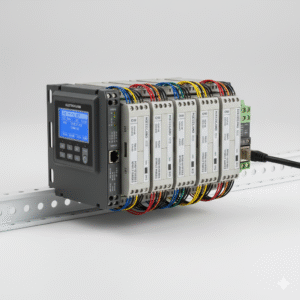
A PLC (Programmable Logic Controller) is a rugged industrial digital computer used for automation of electromechanical processes such as control of machinery on factory assembly lines, industrial equipment, and process control systems. PLCs are highly reliable, designed for harsh industrial environments, and allow easy programming, monitoring, and modification of automated processes. They form the backbone of industrial automation and control systems.

A Variable Frequency Drive (VFD) is an electronic device used to control the speed and torque of AC motors by varying the motor’s input frequency and voltage. VFDs improve energy efficiency, optimize motor performance, and enable precise control of industrial processes. They are widely used in pumps, fans, compressors, conveyors, and other motor-driven systems in industrial, commercial, and renewable energy applications.

Timer Relays are control devices used to delay or control the operation of electrical circuits based on a pre-set time interval. They are widely used in automation, motor control, lighting, and process control systems to manage sequential operations, delays, and cyclic functions. Timer relays ensure accurate timing and reliable operation, enhancing the efficiency and automation of industrial and commercial electrical systems.
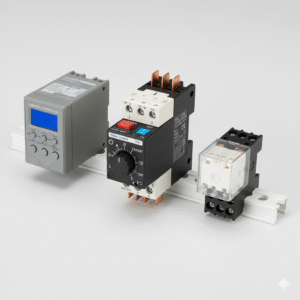
Relays are electromechanical or electronic switching devices used to control electrical circuits by opening or closing contacts in response to an input signal. Overload relays protect motors and circuits from excessive current, auxiliary relays provide signal and control functions, and protection relays safeguard electrical systems from faults like overcurrent, undervoltage, and short circuits. These relays are critical components in industrial automation, motor control, and electrical protection systems.
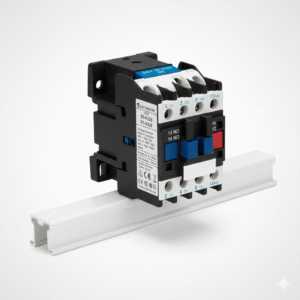
A Contactor is an electrically controlled switching device used for switching an electrical power circuit. It is primarily used to control electric motors, lighting, heating, and other electrical loads remotely. Contactors are designed for frequent operation, providing reliable switching and protection in industrial and commercial automation systems. They are widely used in motor control centers (MCC), automation panels, and power distribution systems.

Neutral Links and Earth Bars are essential electrical distribution components used to safely manage and distribute neutral and earth connections in electrical panels, switchgear, and distribution boards. They provide a centralized, secure, and organized point for connecting multiple neutral and earth conductors, ensuring safety, reliability, and efficient current flow in electrical installations.

DIN Rails are standardized metal rails used for mounting electrical and industrial control equipment, including terminal blocks, circuit breakers, relays, and other modular devices. They provide a secure, organized, and easy-to-install platform for electrical components, simplifying wiring, maintenance, and panel layout. DIN Rails are widely used in control panels, switchgear, distribution boards, and industrial automation systems.
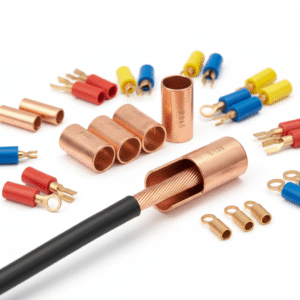
Cable Lugs are electrical connectors designed to securely terminate and connect electrical cables to equipment, busbars, or switchgear. They ensure reliable electrical contact, reduce resistance, and provide mechanical stability for high-current applications. Cable lugs are widely used in industrial, commercial, and residential installations to facilitate safe and efficient power distribution.
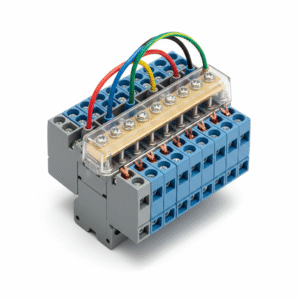
Distribution Blocks / Terminals are essential electrical components used to safely connect, distribute, and manage electrical power in control panels, switchboards, and distribution systems. They provide a secure and organized way to connect multiple incoming and outgoing conductors, ensuring efficient current distribution while minimizing electrical faults. Designed for durability and ease of installation, distribution blocks are widely used in industrial, commercial, and residential applications.
