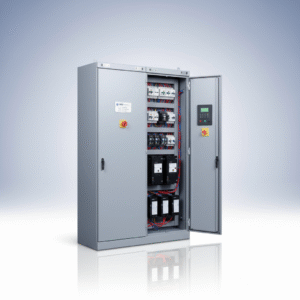
ATS/AMF Panels are intelligent power transfer systems designed to automatically switch the electrical load between the main power supply and an alternative power source such as a generator. These panels ensure uninterrupted power during mains failure, making them essential for critical facilities. Built with precision control logic, they sense power outages instantly and trigger automatic generator start-up and load transfer, ensuring continuity and protection.
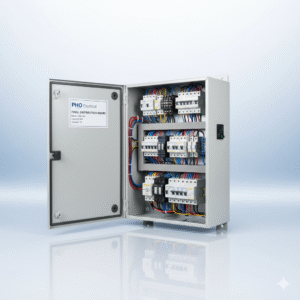
The Final Distribution Board (FDB) is a compact electrical panel designed to deliver power from Sub Distribution Boards (SDBs) to end-use circuits such as lighting, sockets, appliances, and small equipment.
Built to ensure safe, controlled, and organized power distribution at the final delivery point, FDBs incorporate protective devices like MCBs, RCCBs, and miniature busbars. These boards play a crucial role in preventing electrical hazards by isolating individual circuits and providing overload and short-circuit protection.
Ideal for homes, offices, and commercial spaces, they ensure reliable and efficient power distribution to the final electrical loads.

The Main Distribution Board (MDB) is the central electrical panel responsible for receiving incoming power from the utility or transformer and distributing it to various sub-distribution boards, circuits, and loads. Built with high-quality switchgear components, it ensures safe, reliable, and efficient power distribution across an entire facility.
Engineered to handle high current ratings, MDBs include main incomer breakers, busbars, protective devices, metering, and outgoing feeders. These boards are designed with robust enclosures, proper ventilation, and advanced safety mechanisms to ensure stable operation even under heavy electrical demand.
Suitable for industrial plants, commercial complexes, data centers, and residential buildings, MDBs play a vital role in electrical safety, overload protection, and system management.

A Motor Control Centre (MCC) is a centralized panel system designed to control, protect, and manage multiple electric motors in industrial and commercial environments.
Built with high-quality switchgear components, MCC panels integrate motor starters, overload relays, contactors, circuit breakers, and monitoring devices in a single enclosure. They ensure reliable motor operation, enhanced safety, simplified maintenance, and smooth process control.
MCCs are ideal for facilities with numerous motors operating simultaneously, such as manufacturing plants, HVAC systems, pumping stations, and processing units.

The Outdoor Distribution Board / Feeder Pillar Box is a robust, weatherproof electrical enclosure designed for safe and reliable distribution of power in outdoor environments. It acts as a central point for connecting incoming and outgoing feeders, providing protection, control, and isolation for underground or overhead power distribution networks.
Built with corrosion-resistant materials and equipped with high-quality switchgear components (MCBs, MCCBs, fuse units, isolators, and busbars), the Feeder Pillar Box ensures uninterrupted power delivery in harsh weather conditions. It is commonly installed in public utilities, street-lighting systems, industrial campuses, and commercial outdoor setups.
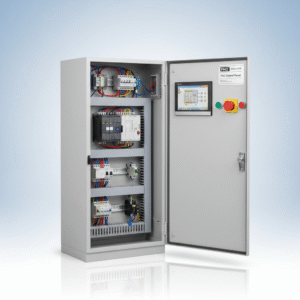
A PLC Control Panel is an advanced automation system designed to manage, monitor, and control industrial machinery and processes. Built using high-performance Programmable Logic Controllers, these panels ensure precise, reliable, and flexible control over operations. They integrate sensors, actuators, drives, and communication modules to achieve seamless automation in diverse industrial environments. Engineered for durability and accuracy, PLC Panels improve productivity, reduce human error, and support complex process sequences with ease.
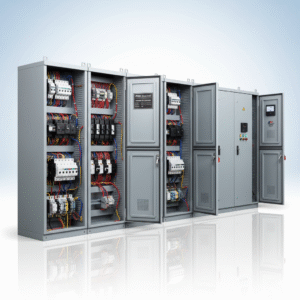
The Power Control Centre (PCC) is a high-capacity electrical panel designed to control, manage, and distribute power safely across industrial and commercial installations. PCC panels serve as the main power distribution point within a facility, handling large electrical loads and providing precise protection through advanced switchgear components.
Equipped with Air Circuit Breakers (ACBs), MCCBs, metering systems, busbars, and monitoring devices, PCC panels ensure stable, safe, and efficient power distribution. Built with robust enclosures and high-fault-level ratings, they are ideal for continuous heavy-duty power applications.
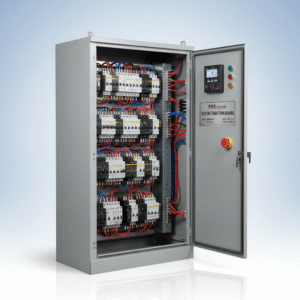
The Sub Distribution Board (SDB) is a secondary electrical panel designed to receive power from the Main Distribution Board (MDB) and safely distribute it to various localized circuits. Built with high-quality protective devices and durable enclosures, SDBs ensure safe load management, circuit isolation, and efficient power routing across residential, commercial, and industrial facilities.
Engineered to handle multiple outgoing feeders, these boards improve electrical safety, protect equipment from overload/short-circuit, and offer easy accessibility for maintenance.
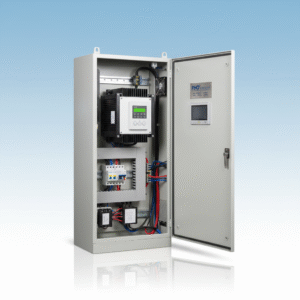
A VFD Panel is an advanced motor control system designed to manage the speed, torque, and direction of electric motors using Variable Frequency Drives. These panels help achieve energy-efficient motor operation by adjusting the motor frequency and voltage. Built with precision engineering, VFD Panels protect motors from electrical faults, reduce power consumption, and ensure smooth operations across industrial applications.