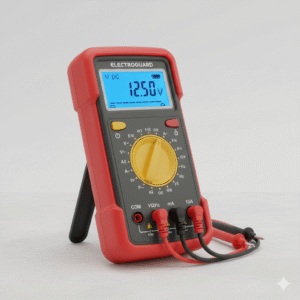
A Digital Multimeter (DMM) is a versatile measuring instrument used to test and measure electrical parameters such as voltage, current, and resistance. It provides precise digital readings and often includes additional functions like continuity testing, diode testing, capacitance measurement, and frequency measurement. Digital multimeters are essential tools for electricians, engineers, and technicians for troubleshooting, maintenance, and testing in residential, commercial, and industrial electrical systems.

DIN Rails are standardized metal rails used for mounting electrical and industrial control equipment, including terminal blocks, circuit breakers, relays, and other modular devices. They provide a secure, organized, and easy-to-install platform for electrical components, simplifying wiring, maintenance, and panel layout. DIN Rails are widely used in control panels, switchgear, distribution boards, and industrial automation systems.
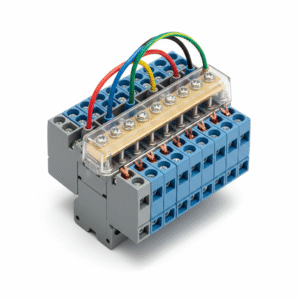
Distribution Blocks / Terminals are essential electrical components used to safely connect, distribute, and manage electrical power in control panels, switchboards, and distribution systems. They provide a secure and organized way to connect multiple incoming and outgoing conductors, ensuring efficient current distribution while minimizing electrical faults. Designed for durability and ease of installation, distribution blocks are widely used in industrial, commercial, and residential applications.
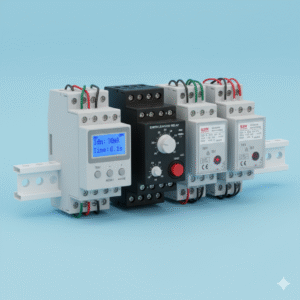
An Earth Leakage Relay (ELR) is an electrical protective device designed to detect earth leakage currents and trip the circuit in case of insulation failure or leakage to the ground. ELRs safeguard human life, electrical equipment, and machinery by preventing electric shocks, fire hazards, and equipment damage. They are widely used in residential, commercial, and industrial installations as part of comprehensive protection systems.

Earthing Pit Covers are protective covers used to safely enclose and secure earthing pits containing grounding electrodes such as rods, plates, or pipes. They provide mechanical protection, prevent accidental contact, and allow easy access for inspection, maintenance, or addition of chemical compounds to maintain low-resistance earthing. Made from durable and corrosion-resistant materials, earthing pit covers ensure the safety of personnel while maintaining effective grounding in residential, commercial, and industrial installations.
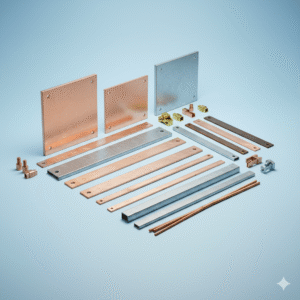
Earthing Plates are metallic plates used as grounding electrodes to provide a low-resistance path to the earth for electrical systems. They ensure the safety of personnel and protection of electrical equipment from fault currents, lightning strikes, and transient overvoltages. Earthing plates are ideal for locations where rod earthing is not feasible, such as areas with rocky or high-resistance soil. They are commonly used in industrial, commercial, and utility installations for effective and reliable earthing.
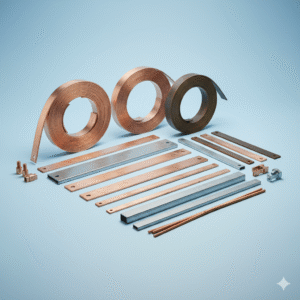
Earthing Strips are metallic strips used in grounding systems to provide a reliable, low-resistance path for electrical fault currents to the earth. They are widely used to connect various earthing electrodes, such as rods, plates, or pipes, and to link multiple equipment points to a common earth. Made from high-conductivity copper or galvanized steel, earthing strips ensure effective dissipation of electrical energy, protecting both personnel and electrical installations.
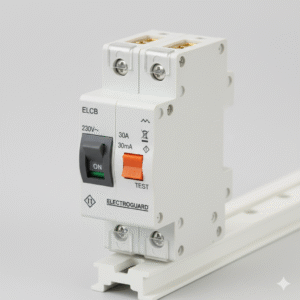
ELCB (Earth Leakage Circuit Breaker) is a safety device designed to protect humans and electrical equipment from electric shocks caused by earth leakage currents. It disconnects the power supply when a leakage current is detected, preventing electrocution and reducing fire hazards. ELCBs are widely used in residential, commercial, and industrial electrical systems where safety is critical.
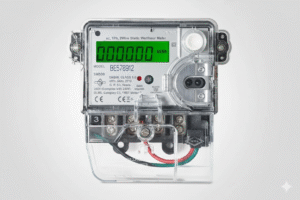
An Energy Meter is an electrical device used to measure and monitor the consumption of electrical energy in residential, commercial, and industrial installations. It provides accurate readings of energy usage in kilowatt-hours (kWh) and helps in monitoring, billing, and energy management. Modern energy meters also support advanced features like real-time monitoring, remote reading, and integration with smart grid systems.